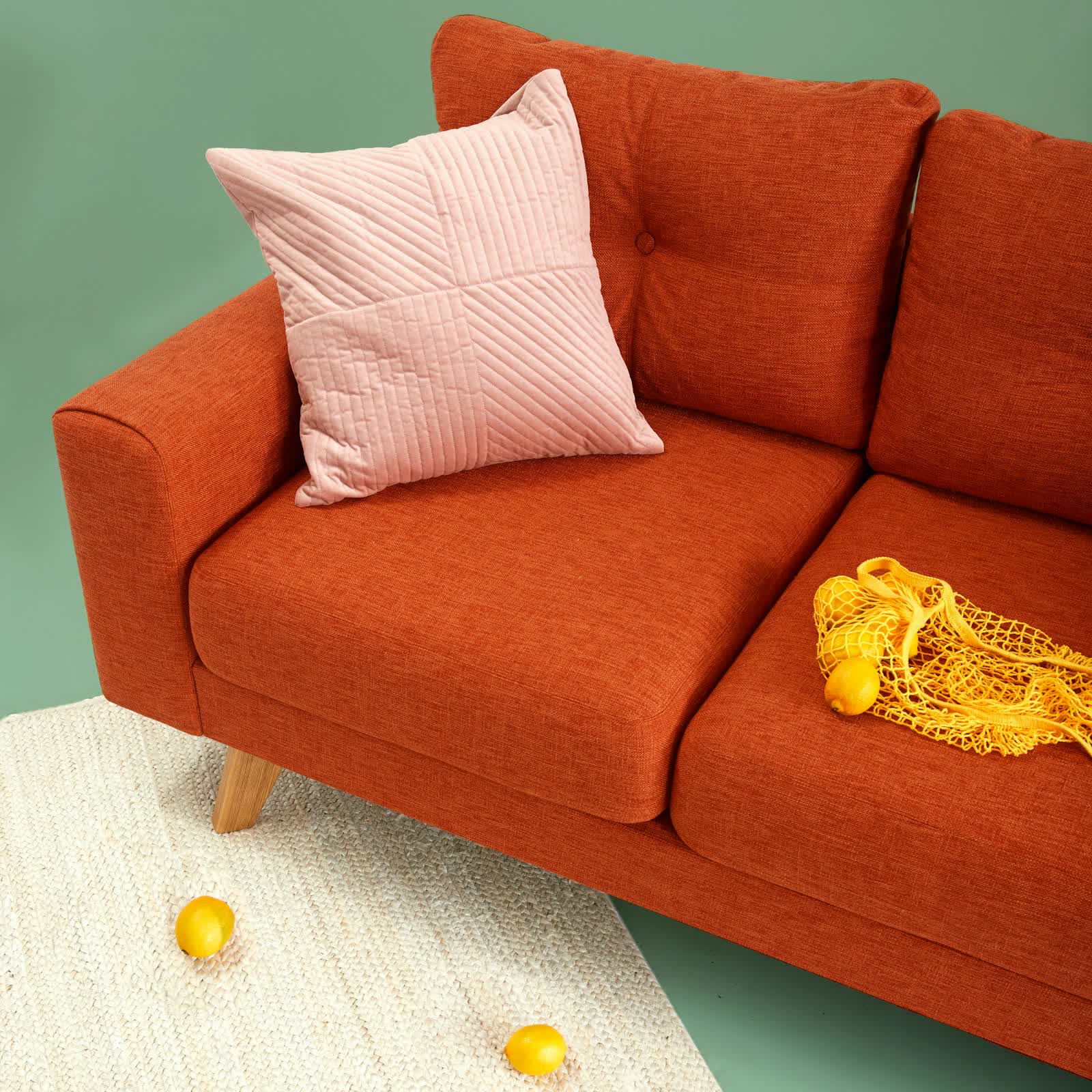
Most people get one thing backwards about small rooms: tiny furniture makes them look smaller, not bigger. The people who style compact apartments for a living use fewer, slightly larger pieces, then run a specific set of tricks on top of that. It's a mistake we see constantly: someone buys a dollhouse-scale coffee table because the room feels tight, and the room ends up looking even more cramped for it. Here's what actually works, with the sizes, the prices, and the mistakes attached.
1. One big mirror, aimed at light
Point a mirror at the window and it does a decent impression of a second one. A full-length arched mirror leaned across from or beside the window roughly doubles the daylight and adds some height. One oversized mirror does more here than a wall of small ones.
Go at least 60 inches tall if the ceiling allows it, and check what the mirror will actually reflect before you buy it. Stand where it would go and look. If it's aimed at a blank wall or the back of the sofa, move it eighteen inches or turn the whole plan around; a mirror that reflects nothing worth seeing isn't doing its job, no matter how nice the frame is. A leaning arched mirror in this size runs somewhere between $150 and $400, and the leaning kind is easier to shift later than one that's mounted.
A gallery wall of small mirrors is a common substitute, and it doesn't do the same work. It reads as decor, which is fine on its own terms, but it moves almost no light around the room. Keep the small mirrors for a hallway and put the budget into one large piece for the main room instead.
2. Fewer, bigger pieces
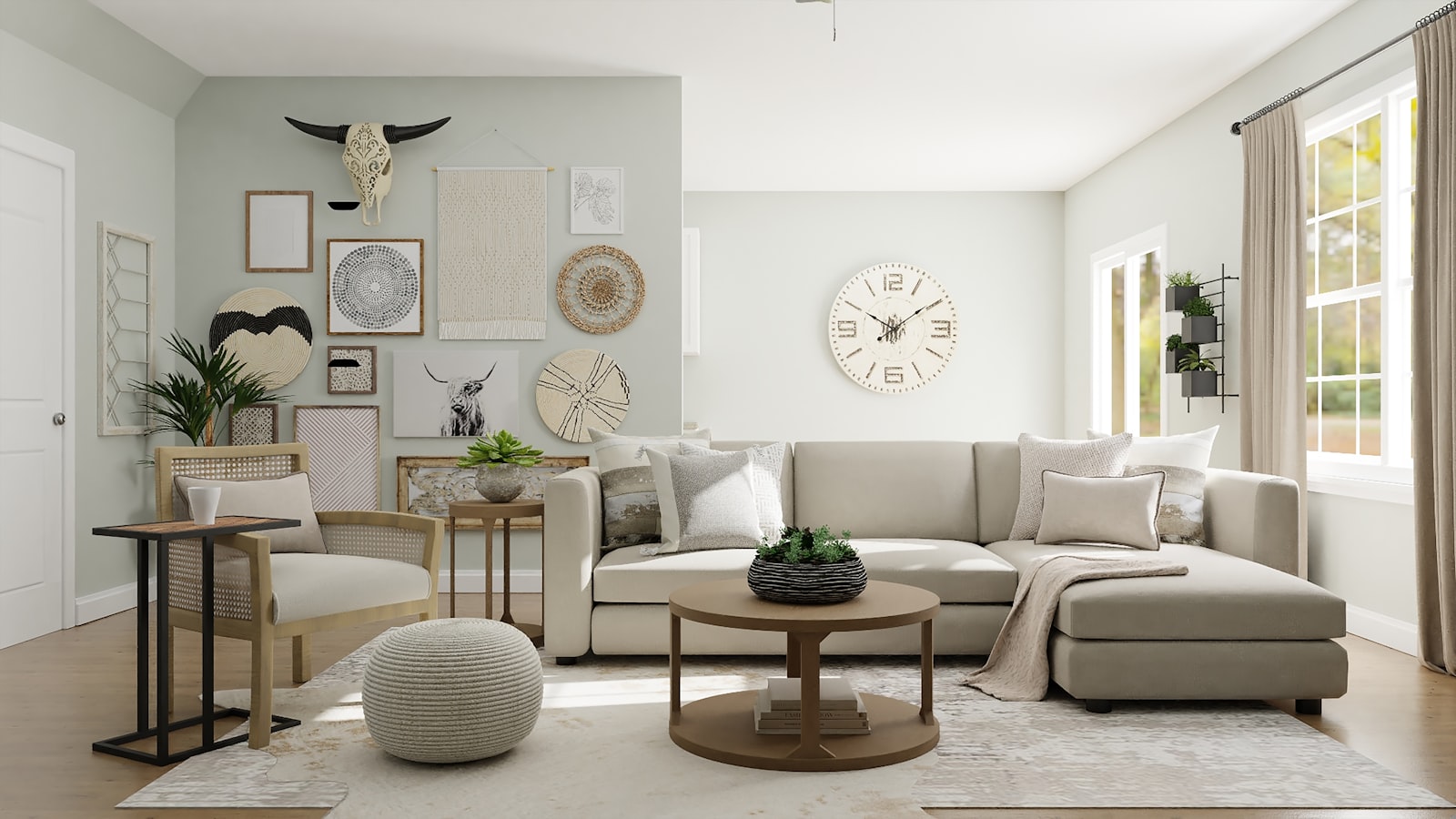
Five small tables read as clutter. One good one reads as a room. Pick the largest sofa the wall honestly fits, then resist crowding satellites around it. The empty space is what lets a room breathe, so treat it as something worth keeping.
Measure the wall in inches before you shop, not by eye in the showroom. A 78-inch sofa against an 11-foot wall usually reads better than a 60-inch sofa flanked by two armchairs squeezed into the gaps, because the bare floor around the single piece is doing the visual work. Three $200 side tables add up to $600 and a busy floor plan. One $500 console does the same job and leaves the rest of the room alone.
- Legs matter. Furniture you can see under feels lighter.
- Round tables save real walking space, not just visual space.
- Match big furniture to the wall color and it more or less disappears.
3. Go vertical with storage
Floating shelves that climb toward the ceiling pull your eye up and add storage without using any floor. Start the first shelf around 14 inches above whatever sits below it, space the rest 12 to 14 inches apart, and style each one about two-thirds full: books both flat and upright, a ceramic, a plant, with the top shelf left nearly empty so the wall still has room to breathe.
The mistake we see most often is filling every inch on move-in day. It's tempting, because empty shelf space feels like wasted storage in a small home. But a shelf packed edge to edge from the start reads as storage, not styling, and it's the fastest way to make a small room feel like a supply closet rather than a place you'd want to sit.
4. Furniture that moonlights
In a small room, every piece needs a second job. Nesting tables that split apart when guests come, a bench with storage inside, baskets that hide blankets under the console. If a piece only does one thing, it has to earn that footprint some other way.
Storage ottomans are popular for a reason, but the flip-top kind only earns its keep if you actually open it. In practice a lot of them spend years working as plain coffee tables with the lid never lifted, because there's always a full glass of water sitting on top by the time anyone needs whatever is inside. A drawer built into the side usually matches how the room really gets used. Before buying anything with hidden storage, picture yourself opening it while a mug is already sitting on top. If that picture doesn't work, the storage won't get used.
The Small-Space Workhorses

5. Hang the curtains high and wide
Mount the rod at least 4 to 6 inches above the window frame, close to the ceiling if you can manage it, and run it 8 to 12 inches past the frame on each side. Open curtains then stack against the wall instead of the glass, so the window looks bigger, the ceiling looks taller, and you keep every bit of daylight coming through.
Skip this one if your window sits tight against a corner. Curtains need wall to stack onto when they're open, and without that space you end up hiding the one feature you were trying to show off.
6. One rug, sized up
A too-small rug shrinks everything sitting on it. The front legs of every seat should land on the rug. In a compact living room that usually means going one size up from what your gut says. Oddly, the bigger rug makes the floor look bigger, not smaller.
If your instinct says 6x9, measure the seating area and check whether 8x10 actually fits, because it usually does. A rug that only reaches the front third of the sofa looks like a bath mat under a full room of furniture and shrinks the whole area around it. This is where we'd spend the most per square foot on the list: a decent 8x10 wool rug runs $400 to $900, and it does more visual work than almost anything else in the room.
Small rooms fail from too many small decisions, not too few square feet.
7. Give the walls a job
A walnut peg rail by the door turns coats and bags into something that looks intentional instead of messy. Hang it around 60 to 66 inches up, and style it a little loosely, a jacket and a tote rather than every hook filled, instead of scattering individual hooks across the wall. In a small space, tidy display basically counts as decor, since there's no spare closet to hide the mess in.
This one only works if you actually use it. A peg rail with three coats piled onto a single hook is worse than no rail at all: now the mess is cluttered and mounted at eye level instead of just sitting by the door.
The Detail Layer

8. Keep one surface always empty
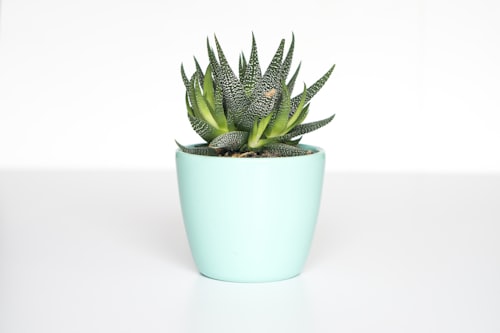
One clear surface does more than you'd think. Pick one, the coffee table or a shelf or the entry console, and keep it clear except for a single object. That one calm spot changes how the whole room feels.
Your eye needs at least one place to land that isn't asking anything of it. Once you've picked the surface, the hard part is defending it: put the mail somewhere else, and give the object on top a reason to be there, a single good vase or a stack of two books, rather than whatever landed there on your way through the door.
None of these tricks adds an actual square foot. They add the feeling of more room, and in a small home that feeling is the part you live in day to day.
Disclosure: This post contains affiliate links. If you buy through them we may earn a small commission at no extra cost to you. We only feature pieces we'd style ourselves.